Backyard Concrete Patio Built From the Ground Up
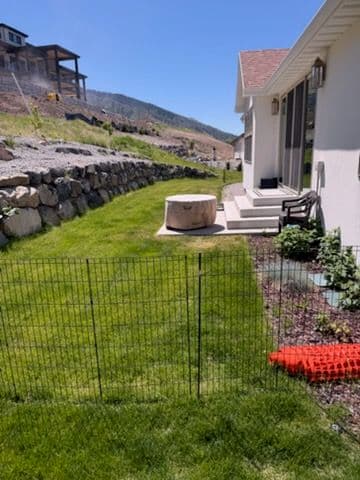
A gravel backyard with no real usable surface is more common than you'd think. It looks unfinished, it's not great to walk on, and it makes it hard to actually enjoy the space. That's exactly what we were working with here - a side yard running along the back of the home with nothing but loose rock and bare ground.
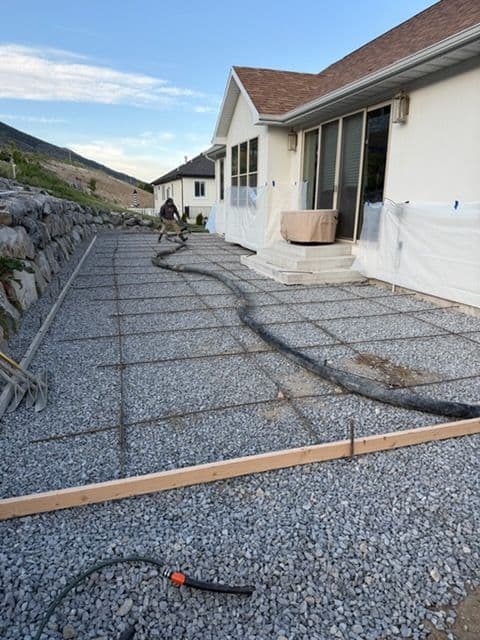
Before a single drop of concrete goes down, there's a lot of groundwork that has to happen first. We laid down a full grid of rebar across the entire area, set the wood forms to establish the slab edges, and made sure the gravel base was properly prepped. That rebar grid is what keeps a slab like this from cracking and shifting over time. It's not visible once the job is done, but it's one of the most important parts of the whole build.
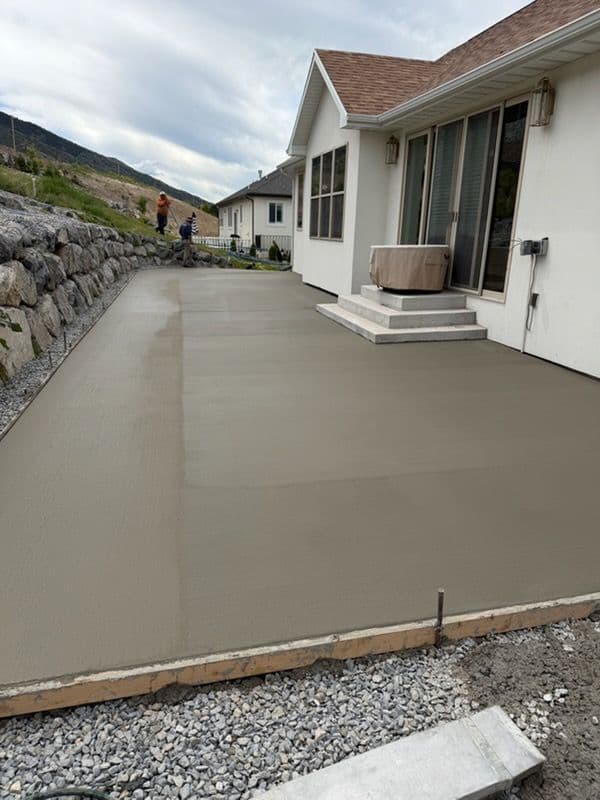
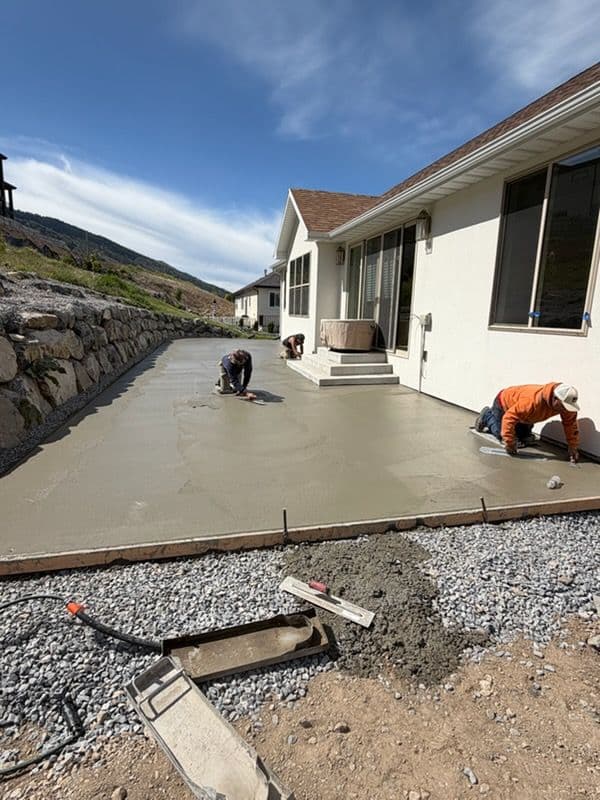
Once the pour started, the crew worked the surface by hand - finishing the edges, smoothing the face, and making sure the whole slab came out flat and even. Hand finishing takes time and attention, but it's what separates a clean result from a sloppy one. You can see the difference in the final surface - consistent texture across the whole pour, sharp edges at the border, and a smooth transition right up to the existing entry steps.
What the homeowner ends up with is a solid concrete patio that connects to the back of the house and gives them real space to use. No more navigating gravel. No more muddy patches after rain. Just a clean, durable surface that holds up year after year and makes the whole backyard feel put together.
That's what a well-built concrete patio actually does for a property. It's not just about looks - it's about adding usable square footage to your home and making the outdoor space work for you. If your backyard still feels unfinished, this is one of the most practical upgrades you can make.