Concrete River Water Diversion Structure Built for Agricultural Land
Getting water from a river to a field sounds simple enough. But building the infrastructure to actually make that happen reliably - that's a different story. This job required serious concrete work in a tight excavation, with water already present and real terrain challenges all around.
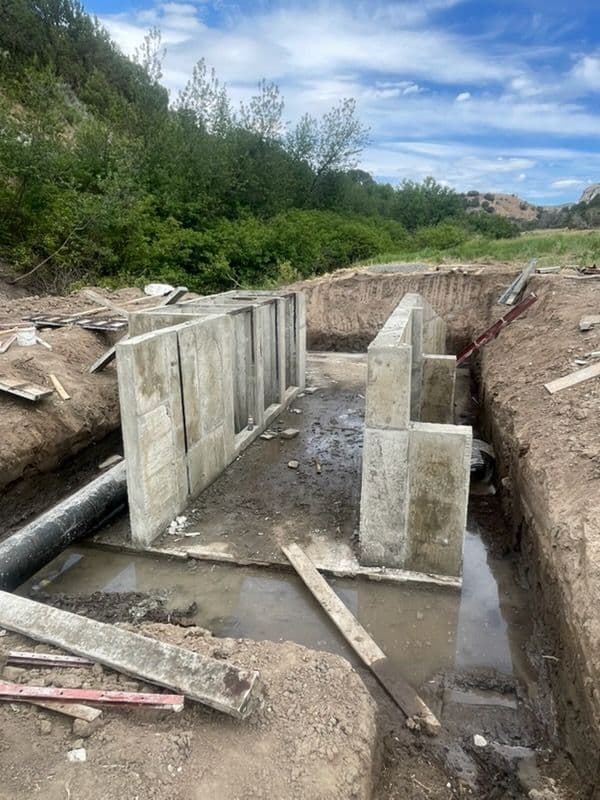
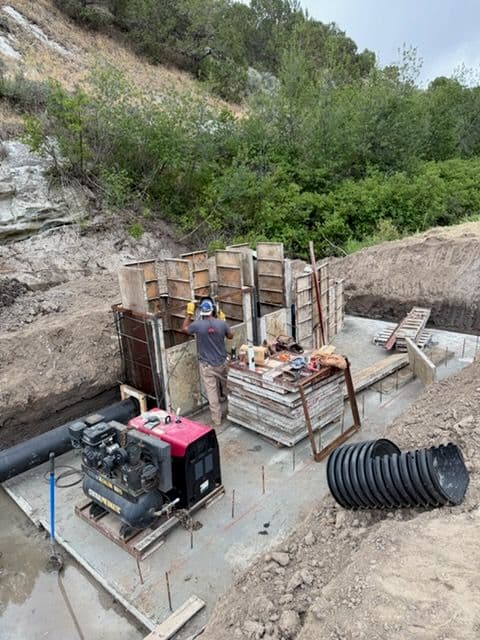
Here's what we were working with: a hillside site, a flowing water source, and the need to build a durable concrete diversion structure that could handle the load and keep water moving exactly where it needed to go. We formed and poured the walls on-site, working with rebar, forms, and a concrete base that had to be right before anything else could go on top of it.
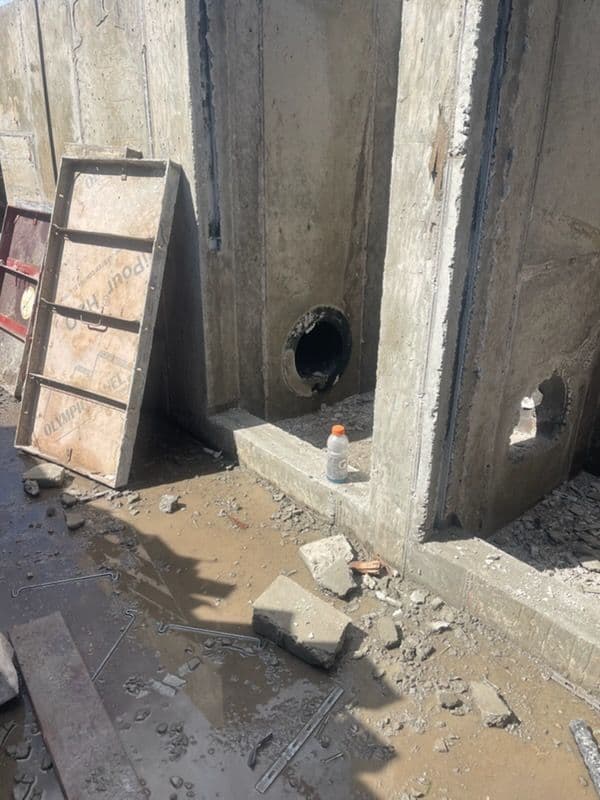
The pipe penetrations through the concrete walls are a key part of how this thing functions. Water enters, moves through, and exits in a controlled way - feeding the field rather than just running off and going to waste. That kind of detail matters a lot on agricultural land where water management directly affects what the land can produce.
We do this kind of work because not every job fits a simple template. Some sites are muddy, tight, and complicated. That's exactly where solid concrete craftsmanship - the kind built on proper forming, good mix, and clean execution - makes all the difference between something that holds up for decades and something that doesn't.
This is the type of job that ties directly into what we do with precast concrete block retaining walls and structural concrete. Whether it's holding back earth or directing water flow, the goal is always the same - build it strong, build it right, and make the land work better because of it.